Calculus: Weekly Reflections on a Personal Project
Tuesday Reflections on my journey towards a computational model of dissociative amnesia

Week of June 16th through June 22nd
I missed Rio and my mom immediately after leaving. It was such a sweet and peaceful time with my mom. Some of my favorite memories with my mom are our solo trips. one of them was when we drove up to Roanoke to see her art show at the Taubman museum. On our way back, we started playing a game which is very like the both of us, who love to read tarot. we decided to ask a question and whatever the next sign said would be our answer. we went asking questions about our love lives, our careers, all the while completely missing our exit. we proceeded to get extremely lost in the backroads of Virginia. we stumbled across a little town where we were pulled over for speeding. luckily we were able to charm our way out of a ticket by playing up our poor, lost defenseless women circumstances. The officer was very nice and redirected us back to the right road where we were finally able to make it home.
It was really nice to see my mom back in her home country again. i hasn’t seen her in person in two years from lack of funds and time. My favorite memory of her this time was getting to know her life in Rio. It was kind of giving me Stars Hollow vibes from the Gilmore Girls but make it Brazil. Her Babette sold coxinhas a few blocks from her apartment and her Kirk worked at a hair salon. Everyone said hi to her and knew her and had an interesting story to accompany them. Also meeting her precious kefir grains (may the ones I killed by accident rest in peace), swinging in her hammock, watching Black Orpheus for the first time, going to the terreiro, and visiting Paquetá for the first time to see wild monkeys.

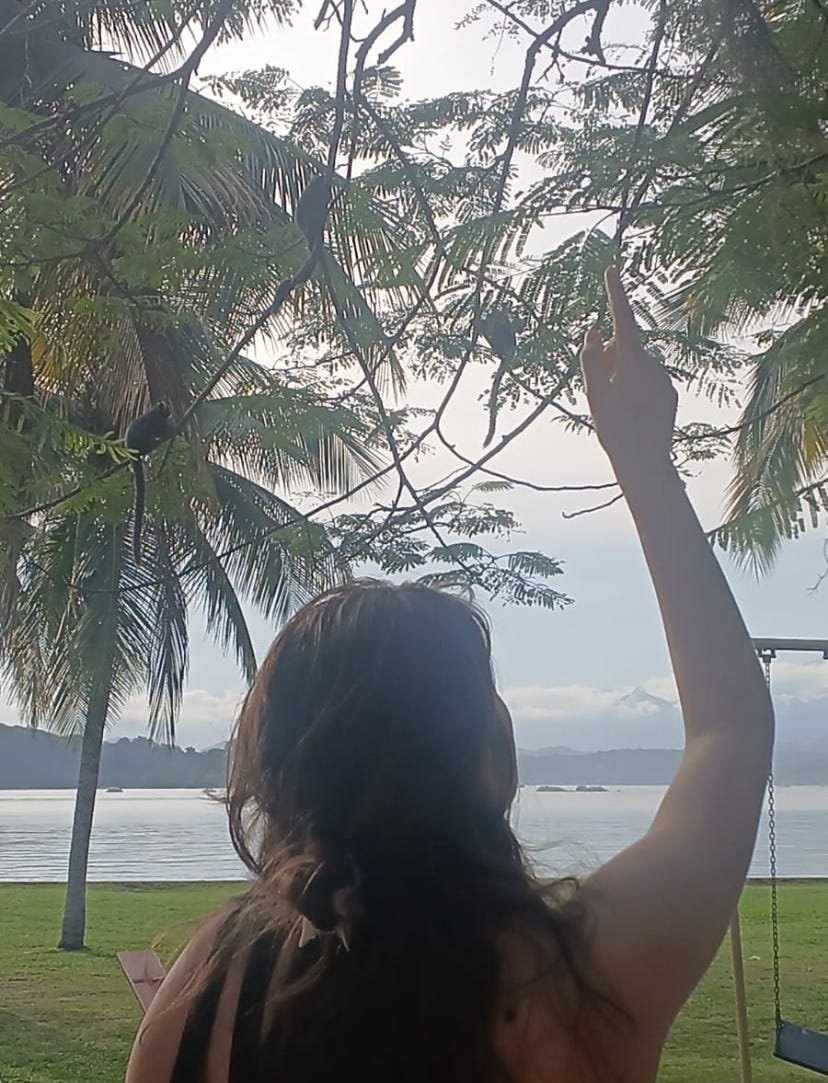
The boat ride to Paquetá
Oh, I also met Michael Jackson by chance. Weird times.
Clube da Esquina N2, the acoustic version by Milton Nascimento, was the song of the trip and I won’t lie, I was teary eyed the whole way to the airport listening to it in my head and thinking of my mom. It’s making me tear up again just hearing it in my head now. We must have listened to it at least 6 times last week.
At one point my mom turned around and said “‘Porque se chamava homem/Também se chamavam sonhos/E sonhos não envelhecem’. Não é lindo?”
Yes it is beautiful. “Why they called themselves men/They also call themselves dreams/And dreams don’t get old.” My mom always says Brazil doesn’t have enough famous poets because all its poets become singers. When I hear songs like this, I see her point.
Me and this song actually have history. I listened to it for the first time (the original version) in my freshman year of college, right at the beginning.
Still one of the absolute most songs I’ve ever heard in my life.
I was happy because I felt free and excited for what life would bring. I had a new group of friends that were a lot of fun, or at least I’d just met them and they seemed that way . I had a fresh crush. I struggled with depression a lot in high school and I felt like life was really looking up for me. I could be anyone. I went on a walk through campus and listened to this song in my happiness and it just put a lump in my throat. I felt something bittersweet and strange in my stomach.
Later on, I would think back to that memory and feel a sense of foreboding, like maybe I’d gotten a bad feeling that night. When I was first looking back at it, I’d feel a twinge of anger and resentment towards myself because everything I was happy about back the blew up in my face. My happiness felt like naivety. I felt like that girl twirling around campus was a bit of an idiot. That song always made me emotional because it reminded me of that day so I loved it but I stopped listening to it.
It was healing getting a new association with it. It’s funny how the things that matter to you a lot can change meanings so many times in life. Every song is like a scrapbook of experiences that never feel exactly the same.
This was my other favorite Brazilian song year that I have cried my eyes out to a million times. Sometimes it reminds me of getting older. Sometimes it reminds me of trips on the train i’m Brazil. Sometimes it reminds me of death. I listened to it the day my Brazilian grandfather died and it was very cathartic. This album is one of my favorites ever.
Send me news from over there
Who’ll be staying
Come and embrace me
Hold me tight
I’m arriving
Freedom to leave is what I like
No planning
Better still is the freedom to arrive
When I want
Every day is coming and going
Life is repeating at the station
There are people arriving to stay
There are people leaving forever
There are people who want to depart
There are people who want to stay
There are people who just came to look
There are people laughing and crying
And so, arriving and leaving
Are only two sides
Of the same journey
The train that arrives
Is the same train that departs
The time to say hello
Is also the time for good-bye
The platform of this station
Is the life of this place of mine
The life of this place of mine
It’s life
One of my big signs that I’m healing over time is that I am more aware of the fact that I’m dissociating and that I’m experiencing a symptom. That happened a lot of times over my mental health journey. A few years ago, when I was dealing with strong intrusive thoughts that I didn’t always see as thoughts but as external material that I could intuit, I had a moment of clarity after the school year ended. I had more time to myself and some space to rest and reflect. In that space of time, I suddenly had the insight that I wasn’t inuiting anything. I was dissociating from my trauma. After that, I had an easier time distinguishing my needs and when I was having a period of bad mental health, even if the symptoms still came and I couldn’t control them.
The school year tends to amplify my dissociation a lot. I thought a lot before I made my theory about whether repression caused dissociation or dissociation caused repression. Was there a tangible mechanism actually stopping me from feeling my feelings or was I so determined to not feel my feelings that I amplified things which stopped me from processing? Personally, I think it’s a bit of both. There are times when I just wished more than anything that I could see everything. I’d think, just show me now. I won’t be scared. It’s just information. On the other hand, I take any potential for high stress and intensity and amplify it in my personal life. I don’t know if I do it consciously or not. But it happens. During the school year, I always in a strong state of adrenaline. I think because there’s an actual time window or a long-term goal, it’s like a perfect inescapable stressor which is manageable and important enough to keep me from actually relaxing. I’ve found since struggling with dissociation that I have a hard time dropping my stressors and forgetting about them. I feel obsessive and latched onto my worries. Even when I see that things are going to be fine, I’m on time, or I’m doing a good job, the stress lingers throughout the whole day, even if I don’t think about it.
This is the first time I sat with that as a dissociative symptom as well. Before, it was stories and random internal material that I could hold onto and sift through all day. When I got better and I realized that that didn’t make much sense, my brain learned to let go of the illogical and random thoughts and learned to latch onto something that was rational and was important but not to the degree that I made it. While a lot of people without dissociative disorder or PTSD can do the same thing, I noticed that this made it harder to wrap my head around my life by a lot. It’s like I knew rationally that things were fine and that life was good, but I couldn’t really wrap my head around it, like it was a big math problem. Simple things about my life seemed really hard to understand sometimes. I actually find myself sometimes randomly magnetized to a random item like a street sign. It’s like it demands an intense amount of attention and I can’t pry myself away. But no matter how much I look at it, it’s like my head can’t comprehend it for like 30 seconds. It’s not even something that matters to me. Usually it’s something that catches my eye at random but suddenly my brain is hyperfixated on understanding this cryptic and mysterious tree branch or person’s face. I can even think on the surface, “It’s a freaking tree branch, you stupid brain. It’s not even a cool or interesting one." But it won’t physically click, like I’m searching through my internal vocabulary to understand this random item in a frantic mental panic. It’s the worst when I’ve already felt stressed out or overwhelmed all day. It’s like a real life version of a loading symbol over my life:

I’ve thought about dissociation in a lot of different ways. Sometimes, it feels like doing a lot of calculus problems at once with no instructions. You’re not just doing a list of them. You’re trying to go back and forth doing a lot. You have to wrap your head around a past experience that is big and complex and with reduced functioning, you have to move on with life.
It’s also like trying to print a bunch of documents with a jammed printer. You just keep loading up documents and the queue gets longer and longer while you’re sitting there trying to fix the jam in the printer.
Sometimes people complain that I’m not listening that intently to what they’re saying. I miss things a lot. It’s not that I’m not trying to listen. It’s like you’re loading up new documents and I’m really preoccupied with getting the jammed paper out. It’s not really a matter of me not wanting to listen. There’s not very much space while my system is working on another thing.
I wrote a paper this year on infant looking time studies. There was one central argument on whether infants craved novelty or familiarity. Most of the time, infants seemed to crave novelty, but every once in a while, they would randomly start to crave familiarity. One researcher hypothesized that when babies were able to fully encode what they learned, via being given ample amount of time and light and everything, they would appear to crave novelty. But if they hadn’t fully gotten a chance to encode the item, they would seem to crave familiarity. The point was that the infants needed to fully encode the item before moving onto the next thing. I’ve thought a lot about that in my own life. A lot of times, after you’ve gone through a period of trauma, you’ll start getting comments about you seeming “stuck”. Unfortunately, it tends to be within a relatively short period of time. People want you to move on. It gets hard to add new things into your life, find yourself, bring in new experiences. I want people who say this to imagine that everyone around you is doing 73 x 4, 17 + 129, etc. A teacher keeps handing you a math problem over and over again and you keep solving it. Now imagine while everyone else is doing that problem, someone throws this one on your desk:
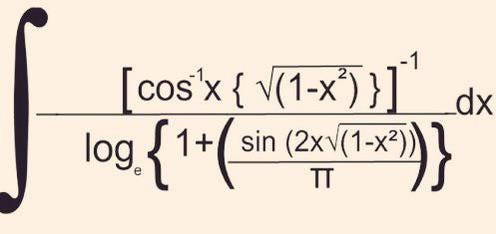
You get the same 30 seconds to complete it. You’ve never seen this before in your life. No one has ever taught you how to do it before. Now 30 seconds later, like clockwork, there it comes again 192 x 9. 45 - 34. And you’re still there with the problem. What is log? What does pi mean? Everyone starts looking over at you because your desk is piled and piled with papers. “Move on”. “Just get the problem done.” “You’re overthinking it.” Soon, everyone is done and going out to recess. You can stay inside and finish the problems to get ahead, but everyone’s going to ask you why you can’t just stop thinking about it and go have some fun. Or you can go outside to recess with everyone else, but in the back of your mind is the dread of knowing that you’re coming back inside to that big, never ending pile of papers you can’t sort out. It dampens the mood the whole time you’re outside and everyone tells you to stop being so gloomy because it’s bringing the mood down. Just chill out and focus on the positive. That’s post-traumatic life.
Now imagine the complex trauma people.
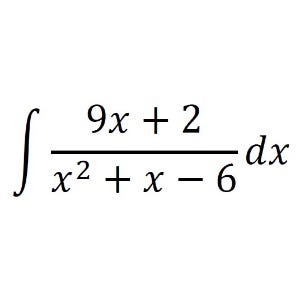
30 seconds later: 17 + 9
Then 82 x 3.
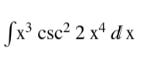
Now 2 x 135.
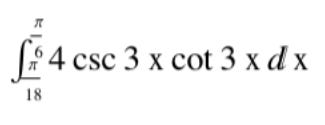
Seems pretty sensical that you’d be overwhelmed, no?
This project makes me feel a lot of emotions of every kind. I feel excitement, gratefulness, curiosity. But a common emotion I feel is resentment. I feel resentful because I’m 24 years old and I am having to figure out my own disorder. It’s kind of nonsensical to have expected someone to magically figure this out but if I had had an answer and I didn’t feel marginalized in how I move through the world, I wouldn’t have done this at all. I just felt so drastically in pain and confused that it felt necessary. Many times I wish I could have just handed it over to someone else. But there was no one else to hand it to. So a lot of times I feel resentment because I can’t just let the cure to someone else’s problem sit around and I have to do it. It’s a tiring task though and I’ve given a lot of myself to it. The other thing is that even in the magical situation where someone would take my idea and do something with it, it wouldn’t be urgent to them like it felt for me. To another person, it would be a cool publication opportunity or an interesting thought to explore that could sit on the desk for a rainy day. They would never understand how when you’re in this situation, it’s hard to imagine waiting even one more day for an answer. It’s not just science to me. It’s somebody’s life alleviated. It’s one less survivor gaslit by an ill-informed psychiatrist. It’s one less survivor having bad questions asked of them in a justice system. It’s one less person with a complex trauma without the right tools to approach their symptoms. I just couldn’t even wait one more second to finish it. I couldn’t wait 10 years. I couldn’t wait for a PhD program or a grant or someone to throw me a bone.
I feel resentful when I see everyone else living a normal life. I feel stunted and behind. I feel embarrassed because I don’t have the same stories to tell. I feel scared because people keep acting like I’m wasting my early 20s. But I also feel angry that this stigma exists and I just want this off my chest so I had to finish this work. But I grieve the time I spent suffering from this disorder, navigating it without enough support, and then having to dedicate hundreds of hours to solving the issue by myself with no money or support. I really hope when this is done, it will feel rewarding and worthwhile and I don’t look back and feel sad that I had such a heavy time in life.
I’ve been reflecting on resilience and how there’s a difference between surviving something and truly being resilient. I’ve met people who survived things but they didn’t really actually mentally support themselves or grow past their circumstances. They spent a lot of time hoping other people would solve things for them and getting knocked around by every bump in the road. That’s not a bad thing. I think it’s a stage in everyone’s healing journey. You feel very victimized. You feel like it’s not fair that you went through something no one else did so why should you deal with it? Why should you grow a touch skin? Being sensitive feels like clinging onto the right to innocence and softness that was stolen from you. If it’s your problem, why shouldn’t it be everyone else’s?
I battled that a lot my first few years post trauma. Particularly being younger, I will admit I fell asleep a lot of nights just daydreaming about someone saving me, seeing me, or taking my pain away. No one around me really had the tools to really comprehend my complex needs back then as a student on a college campus. I felt hurt when my friends didn’t really understand where my head was or when they couldn’t show up for me how I needed. I felt bitter that I had to go without. It felt impossible to truly get my needs met because as real as they were, it was a big expectation of the people around me at the time. At some point I looked back and realized that no 19-21 year old knows what to do or say or how to understand their friend who was raped on campus and is dealing with a Title IX trial. That was something I unfortunately had to learn but it’s not in the average young person’s set of skills. Sometimes people bumbled around or made me feel left out or abandoned not because they meant to but because thinking through experience in a mature way required an older adult with either strong maturity or a psychology degree. It’s not an easy thing to do.
I read once that a lot of people think they’re not being a victim because they’re being strong. When I say with it, it resonated a lot. There were plenty of times that I separated myself from my sense of agency because I was tired or it felt unfair. I stopped myself from meeting my own needs all the time because I was tired of being everything for myself. I was scared that if I truly started healing those wounds and no one has been around to see them, it would mean giving up the window of time where I could feel understood or deserve softness. All the while I would never have received what I was searching for. Because I wouldn’t need it anymore. So I ket picking at the emotional scab just in case the opportunity would roll around, feeling hurt and disappointment when inevitably that scab healed up faster and faster, time rolled by, and that window of opportunity seemed to pass anyways.
There’s no right or wrong when it comes to healing from trauma. I won’t say that was bad or morally wrong or that I should have done better. I was dealing with something no one should have to deal with and there’s not really a correct way to navigate that.
That being said, I think I started to really feel resilient when I finally accepted that people couldn’t always meet my needs and that was reality. It’s not because I needed too much and it’s also not everyone else’s fault. I felt resilient when I finally decided that I deserved a good life regardless of whether other people showed up for me or not. I got back up and built it. I stopped feeling resentful. I embraced my sense of agency again, which I was struggling to pick back up again after it had been knocked out of my hands. That’s when I truly stopped feeling like a victim and started feeling like a survivor.
When I got home, I continued working on my paper on loneliness. I’ve been on a highly informal side quest to learn a little bit more about the male loneliness epidemic and men’s mental health since having some interesting journeys with White men this year. I wanted to get more informed. I learned some very interesting facts from what was actually my own professor’s paper which this assignment was based on:
Loneliness is not an objective experience related to an actual quantifiable amount of relationships. It is a subjective experience based on an individual’s perceived lack in how their connection needs are getting met. People can have 100 friends and feel lonely or 3 friends and feel extremely fulfilled.
In a meta-analysis of nearly 400,000 individuals across all age groups, there was apparently no strong evidence for gender differences in self-reported loneliness. I found this interesting, given the emphasis we have collectively put on male loneliness. However, a more recent study using data from the “large, global” BBC Loneliness experiment did show that men experienced greater loneliness than women, particularly those in individualistic cultures. It seems the data is a bit divided but does somewhat back the idea of a male loneliness epidemic. Some more back and forth:
From “Gender Differences in Loneliness across the Lifespan: A Meta–Analysis”: Three–level meta–analyses were conducted with 751 effect sizes, covering 399,798 individuals (45.56% males). Results showed a close–to–zero overall effect (g = 0.07). Most examined moderators were non–significant, except for age, the scope of the sampling area, and year of publication. Most importantly, all effects were small, suggesting that across the lifespan mean levels of loneliness are similar for males and females.
From “Gender Differences in Loneliness”: Earlier studies on gender differences in loneliness appear to have produced contradictory results. However, when 39 existing data sets were classified according to whether they used the UCLA scale (N = 28) or a self-labeling measure (N = II) of loneliness, the results revealed a clear pattern. Statistically significant sex differences are not usually found with the UCLA scale, but, when they are found, males typically have higher loneliness scores. In terms of self-labeling, women more frequently than men admit being lonely.
From “Gender Differences in Loneliness Over Time: A 15-Year Longitudinal Study of Men and Women in the Second Part of Life”: Our analyses show that women were more lonely than men also in adjusted analyses. Logistic regression analyses indicated that loss of a partner and poor mental health are prospectively related to loneliness among men and women, whereas other factors like becoming a partner, stable singlehood, and poor physical health were related to loneliness among women but not men.
This is the one I found very interesting, though. In another study, young British adults from the ages of 16 to 24 who identified as Black or an ethnic minority were more likely to report higher levels of loneliness than those who did not. Let’s state our limitations here, first of all. This is one study thus far (without my own further research) and obviously set in the UK. However, I found this quite interesting as one of the primary ways I’ve seen men’s mental health contextualized is within the legal system, and anecdotally, men’s mental health seems to be a nice umbrella reason for a host of different hate crimes committed by young White men. Here are some more interesting statistics from the Gov.uk website on the UK in specific, since this is where the study was done:
Black people were 2.2 times as likely to be arrested as white people – there were 20.4 arrests for every 1,000 black people, and 9.4 for every 1,000 white people.
A higher proportion of prosecutions for mixed and black ethnic groups were against children, 12% and 9%, respectively, compared to 4% for defendants from the white ethnic group. In 2022, children from the black ethnic group received longer custodial sentences, at 23.8 months on average, an increase of 3.6 months compared to 2018 (20.2 months).
When controlling for various offender and case characteristics within logistic regression models, there was a statistically significant association for offenders of black and mixed ethnicity with increased odds of receiving a custodial sentence compared to the white ethnic group, across all five-years 2018-2022.
So then I went off and did a little more research to see if this was just an offshoot. Here’s what I found from different papers:
From “Depressive Symptoms and Loneliness Among Black and White Older Adults: The Moderating Effects of Race”: Blacks, women, those who were not currently working, those who were unmarried, those who lived alone, and those who did not attend religious services had greater depressive symptoms compared to whites, men, those who were working, those who were married, those who lived with others, and those who attended religious services, respectively (interestingly, this study did not find that men in particular were lonelier).
From BBC, Black people more lonely than general population, says new study: One in three black people say they’ve experienced loneliness in the UK, compared to one in four across the general population. [And as for why…] Rhyanna says she also found it difficult to express her feelings because of being black.
“Having to admit that - as a strong black woman - can be something you don’t want to admit in our communities because you want to keep on going,” Rhyanna, who’s 32, adds.
“Within our community, if you’ve got a problem, you don’t speak about it. In my family, it’s put up or shut up... that’s not how I wanted to live my life.
From “How Race, Gender, and Cohort Shape Social Isolation and Loneliness in Older Americans”: At baseline, Silent Generation Black men had higher social isolation than other groups. Silent Generation White women experienced the steepest increase in isolation. Silent Generation Hispanic women and Baby Boomer Hispanic men saw declines in loneliness.
From “Neighborhood Social Cohesion and Loneliness in Mid- and Later Life: Are Benefits Contingent on Race/Ethnicity or Neighborhood Disorder?”: Respondents who identified as non-Hispanic Black, Hispanic, or of another race reported significantly higher levels of loneliness than their non-Hispanic White counterparts. Moreover, non-Hispanic White residents reported the highest neighborhood social cohesion, and the lowest levels of neighborhood disorder.
And yet we never talk about the Black or Hispanic loneliness epidemic. So that’s what’s really interesting. And these groups don’t seem to draw much “benefit” from their mental health struggles in the eyes of the media nor the justice system. I would never have known this fact without intentional research as the constant conversation about male loneliness with a White focus made me naturally assume that White men must be the loneliest group of all, and that’s why they externalize their behavior onto the rest of us. Where did this idea come from? Who started it and why do we seem to share it, despite the research not actually reflecting this idea at all?
This is just my own preliminary thought process in exploring this issue very casually. But I do find it interesting that to date, I have not heard many major cases of non-White ethnic groups getting let off the hook for a violent crime because of mental health. However, it seems that it could in fact be those very groups that are being disproportionately affected by loneliness, though more research would have to be sought out to back this thought process. It made me think of the concept of White fragility, where White individuals are typically seen through a softer and more sympathetic lens, while also having less resilience expected of them. One group lives in a world where ADHD is a justifiable reason for rape or bullying is justifiable reason for mass murder, in the eyes of the legal system.
I read this paper on incels. First of all, I need the general population to know how absolutely fun and entertaining it is to read research articles. Everyone is so obsessed with YouTube video essays but you will get the same type of satisfaction reading a research article. They can honestly even be like really high end and well cultivated gossip if you find the right wormhole. I felt that way reading the dissociation controversy papers where people were @ing each other but academically in this back and forth psychology beef. To borrow a phrase, research articles can be tea too.
And this article was tea. I had a fun but somber time reading this article doing a qualitative analysis of the manifesto written by Elliot Rodger, an incel. I found it fascinating. These lines stuck out to me:
“Elliot Rodger, for instance, who committed the Isla Vista mass murder, killing six and injuring fourteen people before killing himself, left a 137-page manifesto that mentions the word “lonely” 149 times, “loneliness” 30 times, and “alone” 52 times (Rodger 2014). Blaming women, men who are sexually more successful than him, and society at large for his lonely existence, he finally decides to take revenge on the world that fails to give him what he so desperately needs, craves, and believes himself to be entitled to — attention, affection, love, sex, and recognition.”
From “The Rage of Lonely Men: Loneliness and Misogyny in the Online Movement of “Involuntary Celibates” (Incels)” by Ruth Rebecca Tietjen and Sanna K. Tirkkonen
I wrote my final qualitative analysis paper on the role of self-determination and agency on the affect of loneliness experiences. In my very small sample size just produced for class (but from real interviews), I did find evidence suggesting that lack of agency tends to overall produce negative affect in participants’ experiences of loneliness, meaning they felt more resentful or angry or sad when they felt like they couldn’t enact their own will or exert their own identity over their experiences for one reason or another. One of the experiences I coded in my agency scale was “experience of external control”, as in times when the participants felt that some external element of their life, be it a person or an event of some kind, was reducing their ability to influence the world around them.
I’ve reflected a lot this year as I’ve sat with my own relationship to race on how as much as teach people in oppressive positions that they have power over others, in other ways, being an oppressor can be otherwise detrimental. The irony of being in an oppressive position is that it reduces your sense of agency over the world in many ways. If you are expecting things to be done on your behalf without the necessary work required of you to receive said thing, you’re going to feel a loss of control when people inevitably don’t want to do that things they’ve been forced to do. I spoke in my paper about how loneliness in certain literature can actually be a beneficial quality. Maslov, who created the famous hierarchy of needs, actually believed that loneliness was necessary for actualisation which is a sense of getting to fully embody your deepest potential. I’ve found that to be very true in my own life, personally. I was wondering as a secondary question to this paper, which quality produced the feeling that loneliness was beneficial and which produced the sense that it was detrimental? What I found was that actually choosing the circumstances around that solitude tended to coincide with positive emotions, like a sense of wisdom or inner peace, which made individuals feel aligned with their “true self” (a very important feeling for reducing loneliness in my paper).
I reflected on the incel movement again in the context of these topics. We teach young men that sex is a requirement of masculinity and that women are obliged to have sex with them. They are required to subscribe to their ideals of masculinity and follow their internal script. When this does not happen, they feel a sense of resentment. This reminded me of the code, “Experience of external control”. Men feel controlled by feminism, and in some ironic twist of fate, controlled by women, because they feel like women are not doing what they are supposed to do. They lack the agency to work towards self-actualization by building relational skills or changing their style or evolving their method of communication with women around them. They feel a low sense of agency and ability to actually turn inwards when their problems occur. They feel marginalized by male beauty standards. And I feel for them. On the other hand, I’ve been thinking of the plus-sized movement as a counter-example. Plus-sized women found themselves in a context where their bodies were not seen as beautiful or desirable to a public obsessed with skinny figures. Through the plus-sized movement, their turned inwards, worked towards self-actualization, and exerted a sense of agency by choosing to change their perception of beauty standards. If they didn’t fit them, they would make their own. Many young men who stray from male beauty standards seem to have a harder time saying, “I don’t fit into this image, but I love myself just how I am anyways because loving myself is I choice I get to make.” And that’s really unfortunate.
Oppression creates mutual hurt in every context, regardless of who is receiving the worst pain. Battling oppressive systems is not the attempt to hurt or criticize that those in these positions claim that it is. It is also an opportunity to develop a true sense of agency that allows people in oppresser “seats” to develop unique pathways that stray from the norm, rather than being constricted by those chains.
And one final note on some ongoing reflections on how we frame men’s mental health and oppression:
“Finally as Rodger (2014, 32) claims in his manifesto, the desired attention from a “pretty girl” would have prevented his anger, frustration and sense of worthlessness from escalating into violence. In other words, sex becomes like the incels’ idée fixe — the cause and solution of all of their personal and political problems.”
What I’ve found interesting about how we approach conversations about White men’s mental health and general oppression is that the conversation typically centers around reducing the amount that we trigger or upset them. I reflected in an essay response to my own video that leftist spaces typically spread the idea that we need to not “isolate” White lower class men through questioning their racism, and this is deemed the appropriate way to unpack the oppressions which impact all of us. In the justice system, it has meant not sending young boys to prison and “ruining their lives”. It’s a collective permissive parenting, I said.
As such, they seem to have come to the same conclusion. If a women would just have sex with him, nobody would have gotten hurt. Obviously, we can look at the problem in this context and see that it sounds quite silly. But we mirror this sentiment as a society all the time. “Just give them what they want and no one gets hurt.”
Is that the real solution? I think the answer is quite obviously a very loud, “NO.” The “no” we refuse to impose onto them. I learned through therapy and my mental health journey that sometimes triggers will happen uncontrollably in the world and we can’t just run away from it. We have to let ourselves get triggered. White men tend to be adamant about reality as well, don’t they? They hate a trigger warning or a safe space. So maybe that’s a mental health lesson much more worthy of teaching them than, “we will accommodate your every mental health need, even if the solution is traumatizing others.” We’re the parents who will snatch another strange kid’s own sandbox because their son is crying that he wants to play with it. How dare they say no to their precious little boy?
And that’s not to diminish the realities of the struggles men have to communicate their needs because of what the patriarchy has taught them. Not at all. I want every man to get the patriarchy out of their heads and hearts and live in freedom. But first of all, if there’s anything this project has taught me, it’s that psychology is no less immune to absorbing some of our oppressive biases. Second of all, the way we navigate White men’s mental health tends to work in opposition to every hard lesson I learned as a young survivor in therapy myself. That’s what really confounds me. Natural consequences and tough lessons are the meat of a fruitful mental health journey. It’s not all rainbows and sunshine and litters of puppies. Not in the slightest. Therapy is not the weepy pity party people seem to think that it is. A therapist that validates everything and lets you get away with everything is not a therapist worth paying money for.
I got a bit more work in on my experiment on Thursday which was frustrating and sort of unproductive. I was trying to get the numbers from my recurrent excitation model, basically the core of why I started this whole thing in the first place. The higher acetylcholine in my model goes up, the less my system should be able to recall the memory it learned. It worked great in my densely coded experiment, where the memory consists of -1s and 1s. This is OG Hopfield network business. It’s really the easier thing to do. Where I’ve been having endless amounts of trouble is my sparsely coded network, consisting of 0s and 1s. So rather than a pattern like this: -111-1-1, I’m basically making my model learn something like this: 01001. I’m just learning the inner mechanisms of a Hopfield network myself so I’m no expert. But I learned from hands on experience that this makes the network significantly more sensitive to blowing up with 1s.
I accepted a little bit of this behaviour after a lot of troubleshooting attempts because I figured, hey, sparsely coded networks are meant to be more biologically realistic and trauma really is a messy process. So maybe this actually shows me a little something about the messiness of trauma anyways. It’s not just clean amnesia and fragmentation but also things like the very disorganized though processes and intrusiveness I struggled with myself. The problem is that when I went to run a series of 50 experiments, each with a random pattern, averaged out, it seemed suspiciously inaccurate. My original seed had an acceptable amount of messiness. But with a bunch of random seeds, it was maybe okayish but way messier than I’d want. This is also bound to make complications when I combine the experiments at the end and there’s a host of complex things going on.
I was too tired and jetlagged to really figure out if this was a Claude issue, a project issue, or… what? I didn’t know. So I decided to rest my head a bit and try again the next day.
The Universe seemed to know I needed a win because I got the sudden urge to house hunt again. I clicked “pets allowed”, expecting to be severely disappointed. Every option was very expensive — except one. It was the cheapest price I’ve paid thus far for a flat, with utilities even included (or so SpotAHome said). The deposit was only for a single week, versus the full month I was worried was about to unexpectedly eat into the savings I had tucked away for my graduate visa. The best part is it was a short walk away from my favorite neighborhood in the city. I quickly applied,and was approved within 30 minutes. Financial stability here I come! I think this was the first time it truly hit me that I’m a fully functioning adult now with a relatively good head on her shoulders and who will most likely not crash and burn. That was way easier than expected.
After figuring out my apartment setup, I decided to start EFT tapping again. I’ve really felt recently like my mind and body are ready to make some big shifts in how I process the world and I’m naturally getting to a very different place in life. My big plan for when I get into a stronger financial spot is to do a round of EMDR and see if it helps me. It’s been my dream for years but it hasn’t happened yet.
In the meantime, I really like EFT tapping but for some reason I completely forgot it existed. I actually started doing EFT tapping for a few weeks right before I started my YouTube channel and promptly after began my project so I have actually had really good results from it. I was doing lots back then on things like fulfilling my potential and etcetera. My favorite is Brad Yates! His really old, grainy videos.
This time, I want to focus more on mental health and money and see if I feel a shift in how I experience the world. The funny thing is that I’m actually a very responsible person but I interact with the world like I’m going to blow my life up at any minute. I see a lot of success but it doesn’t really always feel like it changes how my body reacts to the world. It keeps going back to square one over and over again, which is where this writing series began and my current inner journey in life. Getting your body to update its baseline settings is a bit hard when it’s determined not to be 100% here and with the present day program. Let’s see if it helps!
I’ve been very inspired this year, more than I’ve ever been before. I feel like I have inspiration just dripping out of me all the time, to an almost suffocating degree. I’ve written down so many ideas for research, life plans, books, videos.
Recently, I’ve been thinking about how when I’m older and more established in my career, I want to write a book. My goal is to one day be a research lead and do all these countless projects I have drafted up. That’s when I want to write it. It would be a guide to the research world for young women in STEM. I’d want to talk about how the research world is set up, career tips like how to write a good cold email, and the mentality shifts that are necessary to make it as a young women. I have already had to make so many.
For example, I was always the “good child”. I rarely even cried as a baby, apparently. I was always good natured. I wanted to follow the rules. This is a personality that is very encouraged of young women. But first of all, to get your foot in the door as a young researcher means you have to send a lot of cold emails — research assistant jobs, networking, supervisor requests, the list goes on and on. This was something that made me incredibly nervous because I never wanted people to think I was “full of myself” for trying and I didn’t want to waste people’s precious time. I had to really break out of my shell as someone always trying to appease people and be “good” to get this project done. I had to risk seeming full of myself. I had to be comfortable taking up space and time in people’s lives. That’s something I still struggle with, such as now, as I go to set another meeting with my supervisor to ask important questions about my project. To me, it feels like taking up his valuable resources and mental energy, even if that’s what he agreed to do. So I don’t reach out enough or ask for enough help. But for many men in research, it’s “networking". It’s showing what you’re made of. I got some great numbers that a man would probably be already dying to show off to their supervisor. But I’ve been trying to get all of them at once first to reduce the amount of meetings I have to have with him and not fill up his schedule. These are the things girls do to be “considerate”. But sometimes you have to let yourself be “inconsiderate” to move up, particularly in research which is so reliant on networking and knowing the right people as you go along. Being “inconsiderate” is part of the game of research, and you won’t work your way up or get to where you need to go without it.
I’m sure there will be even more lessons like this for me to learn as a woman as I get my PhD or move into my first minor leadership position or as I step into bigger roles within my career.
On Friday, I did an adulting session based on my last few chapters of reading (by the way, I learned why a rich person invests in a cheap brokerage but it’s an exciting plot twist so I won’t spoil it). On my trip, I got a surprise message saying my phone plan didn’t want to see me go so they gave me 50% off for the next three months. Instead of the whopping £10 a month I was paying before, I would now pay £5. Over my trip home, my card declined. I was worried I would miss out on the deal, as small as it was, because obviously I’ve been on a journey to get a little more financially secure. Every little bit counts! Luckily, when I went back on the website to see if I needed to purchase a new plan as the message said, the phone plan was giving me the option to get the same deal but for 116 months instead. Luck has been very on my side this week!

I should also be paying £300-350 a month less on rent and utilities from now on, which I’m very happy about. I think nearing the end of my book and having an intention has gotten me on a financial lucky streak this month.
I’m in the last quarter of my solar return year aka my birthday is in a little under three months. I’m meant to have a Scorpio rising and Scorpio Venus. It’s still in my dreaded twelfth house, as it has been almost every year for years on top of my natal 12th house. Arghhh. It’s just one degree away.
Hopefully with Scorpio, that means my love life will finally pick up but it’s also not a bad set of placements for my financial life as Scorpio is the sign of shared finances are Venus is also related to money. I want to have a solid 3 month run and get my finances in a solid place before my birthday because if my solar return has anything to say, it’s this is bound to be an interesting and dramatic come up of a year. I’ve been very very ready after a long string of boring hard work charts — Capricorn risings. Virgo venuses in my 6th house. Work work work. Modesty. Consistency. So annoying.
I just chilled on Friday without worry, which is something I’ve been trying to do and am not always the best at. I have housing settled. My financial situation is improving. It seems I’m passing my masters. My project is almost done. So I should chill, right? No drama around the corner?
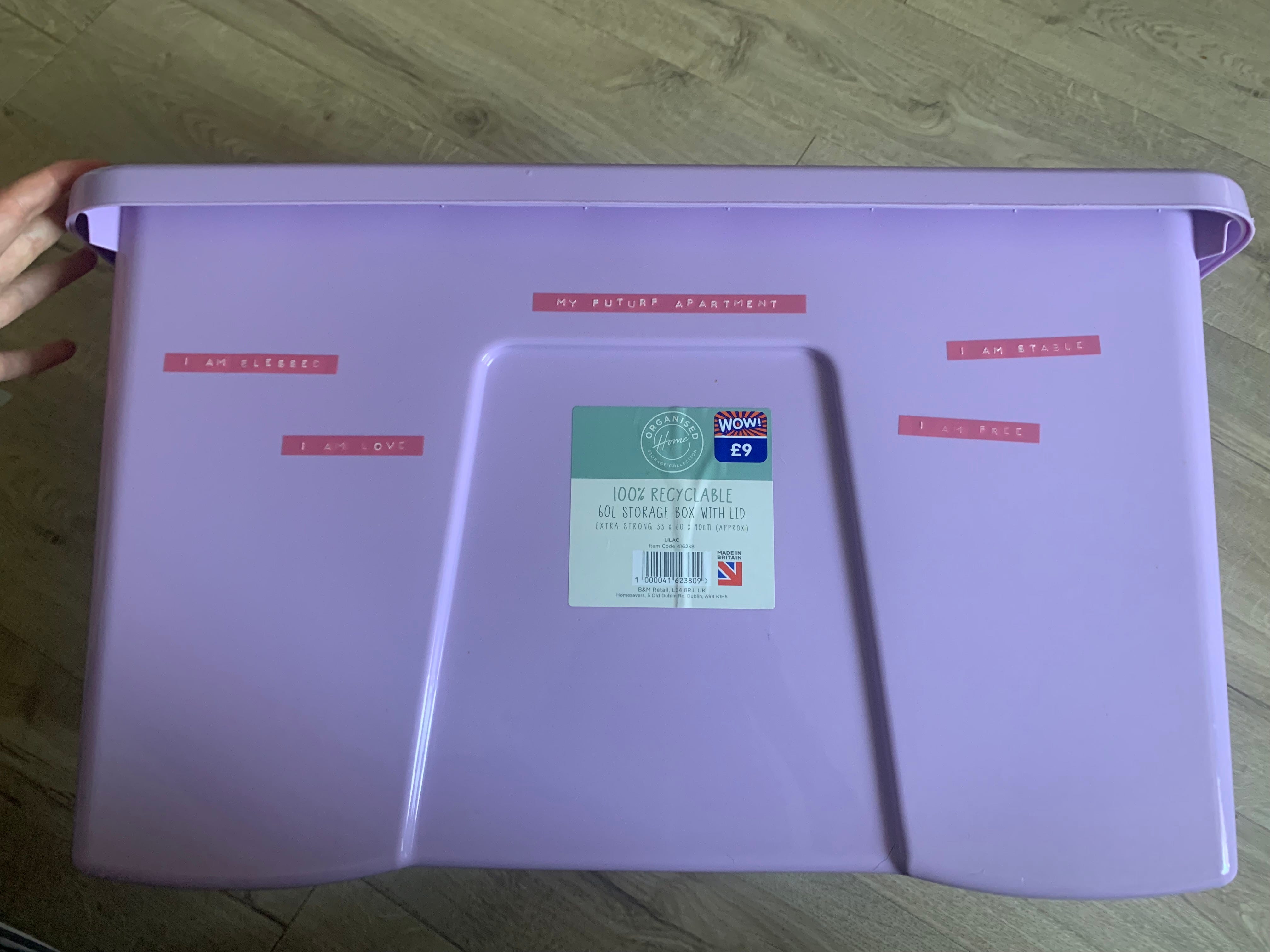
I took some time to bask in my “future apartment” box. When I felt sad or demotivated this year, I would buy a little something for my dream life. Nothing I needed immediately. There’s some things in this box I would love to use but it’s not allowed to be opened until I get in my dream apartment. I have it in my mind’s eye. Here’s a mini tour:
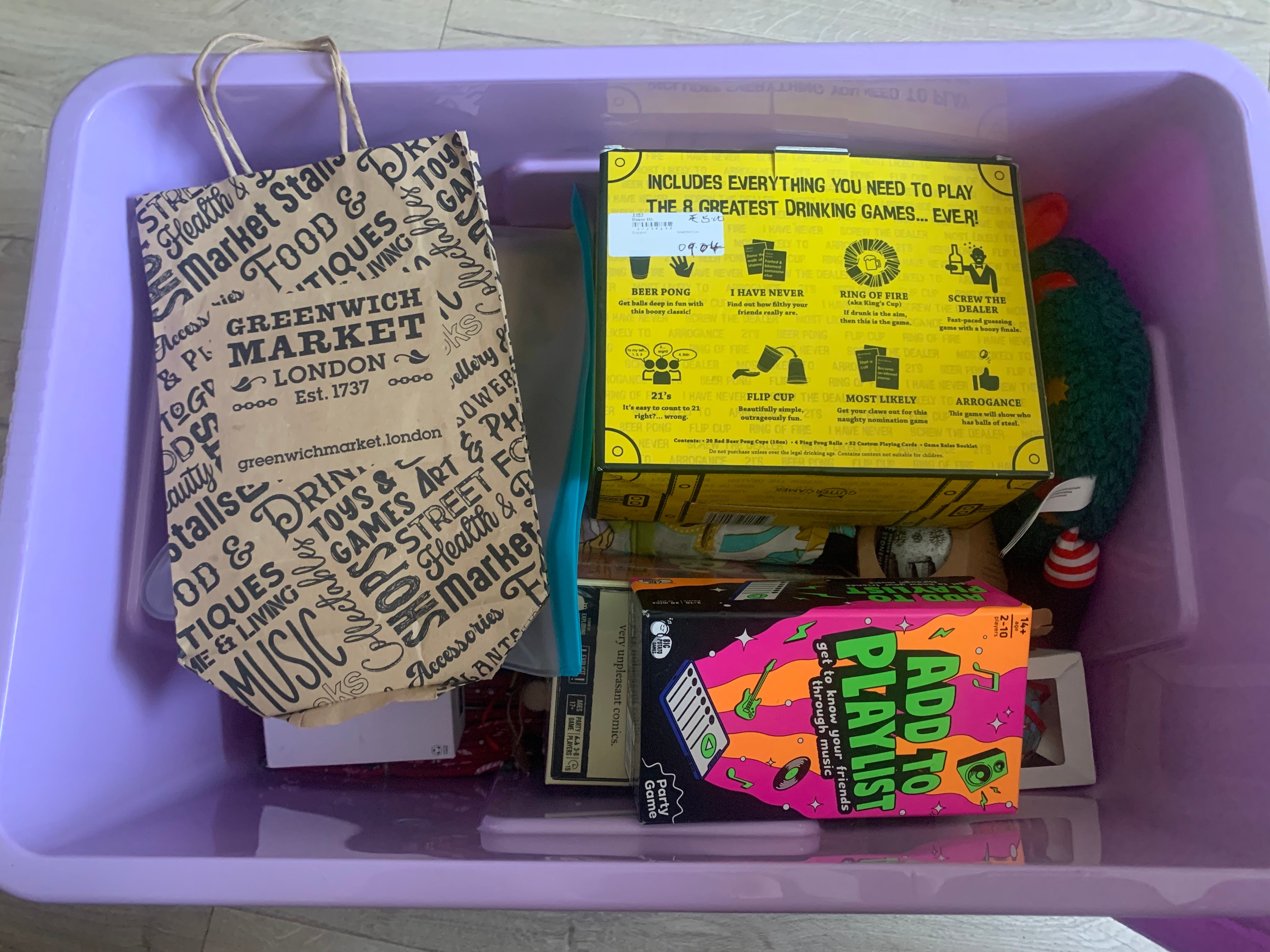
I manifested a trip to Universal Studios with my friends. I want to send everyone a box with a game, a letter, and a disposable camera. These are some but I won’t say what is for who:
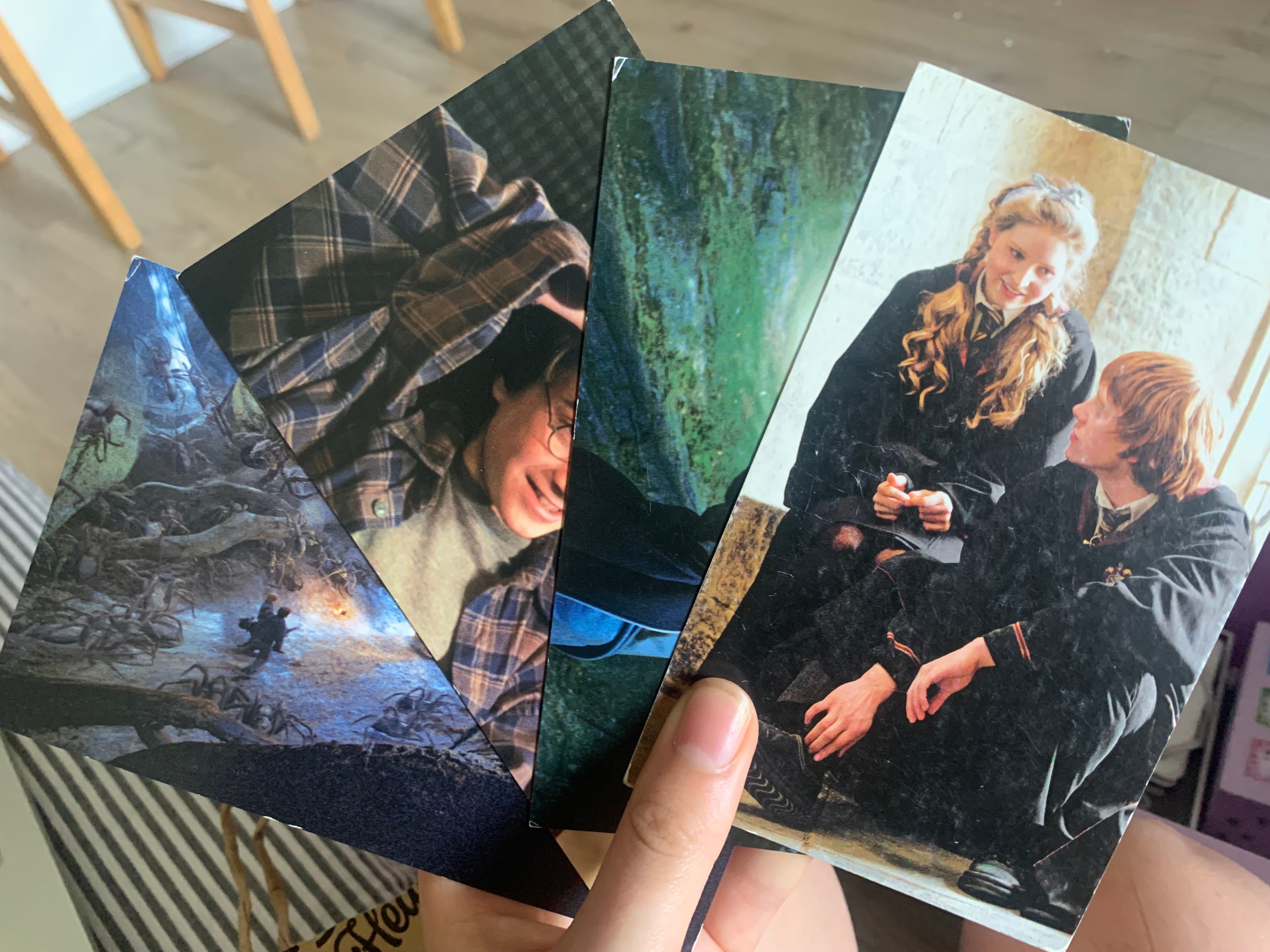
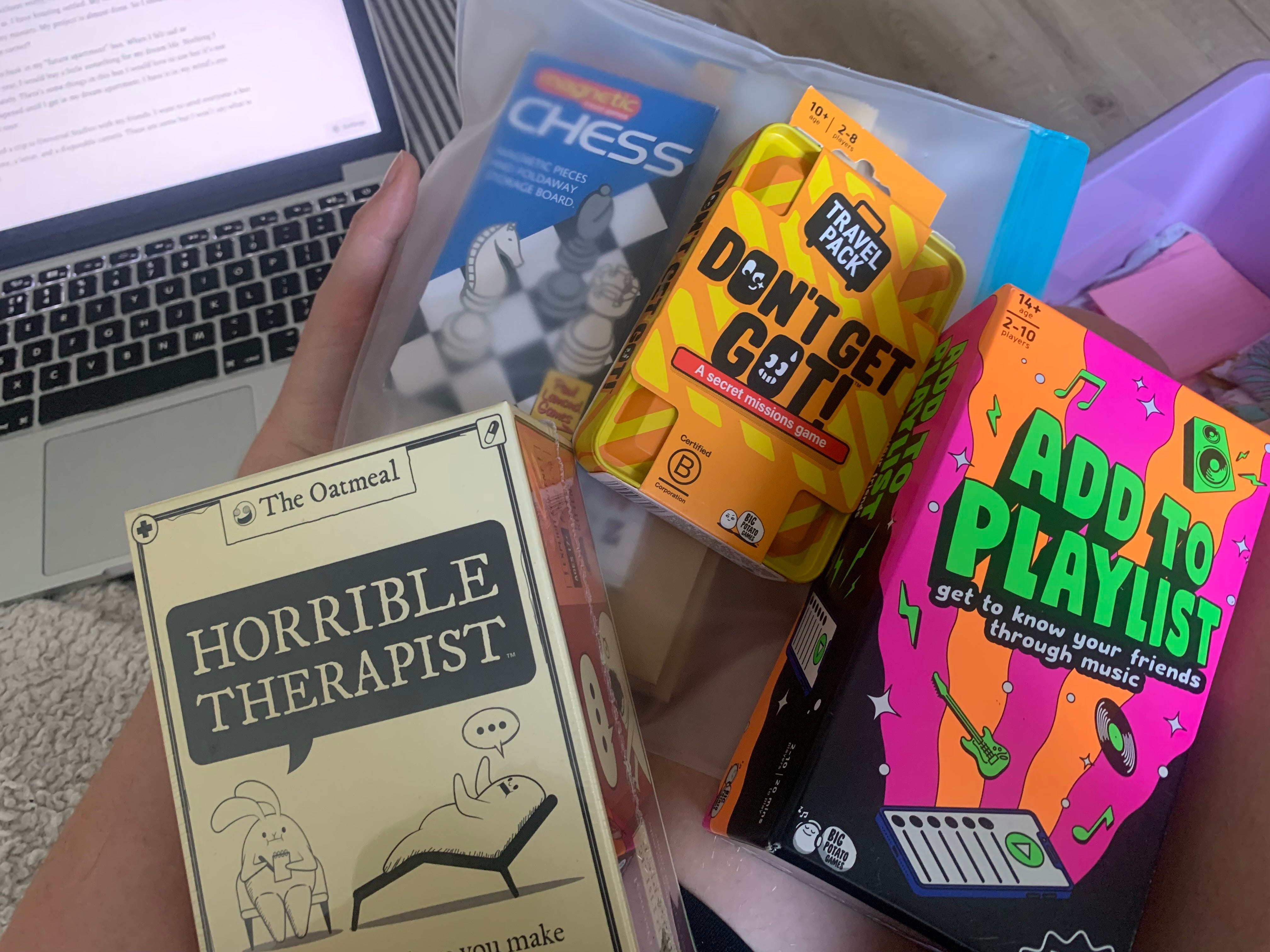
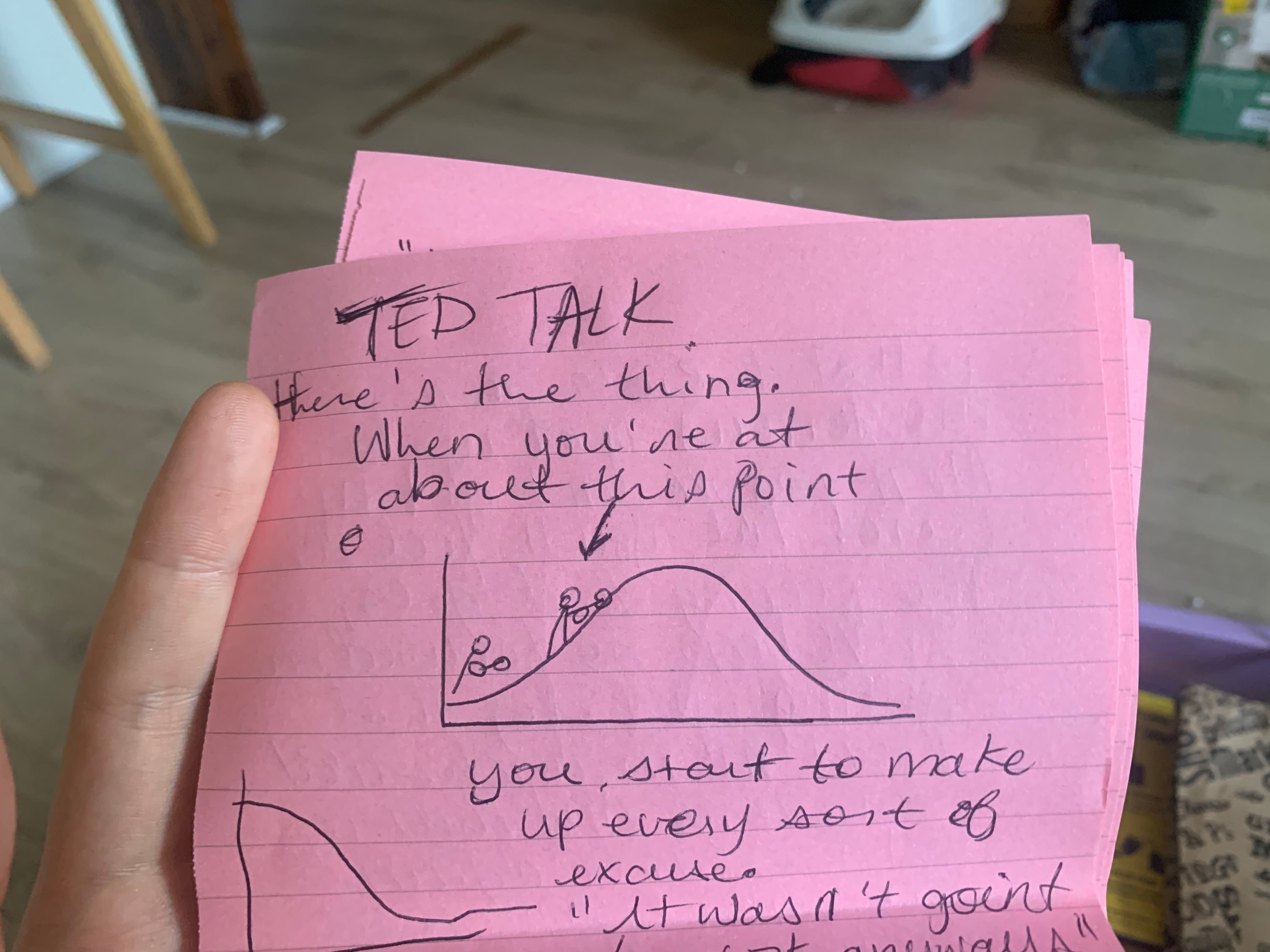
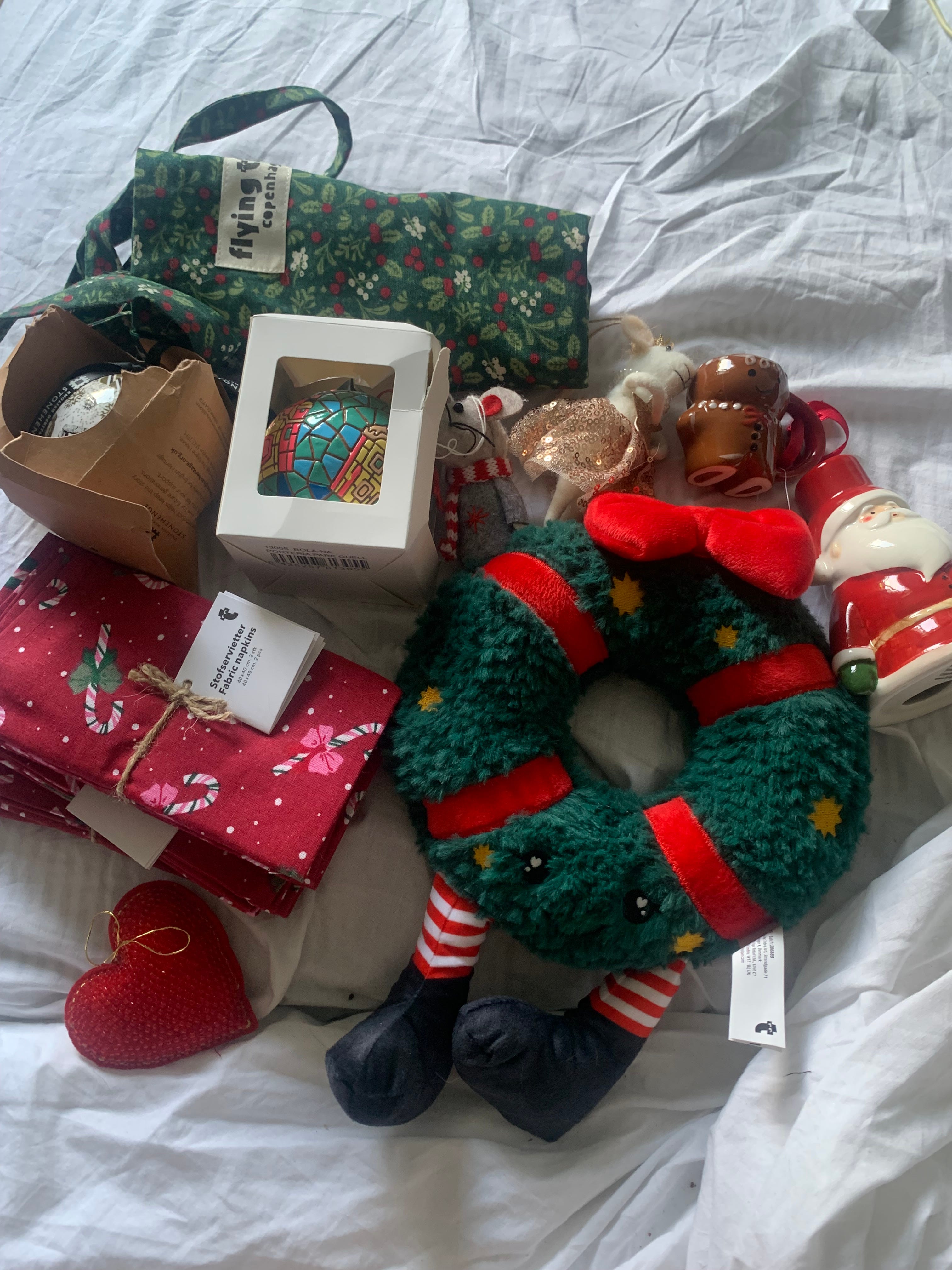
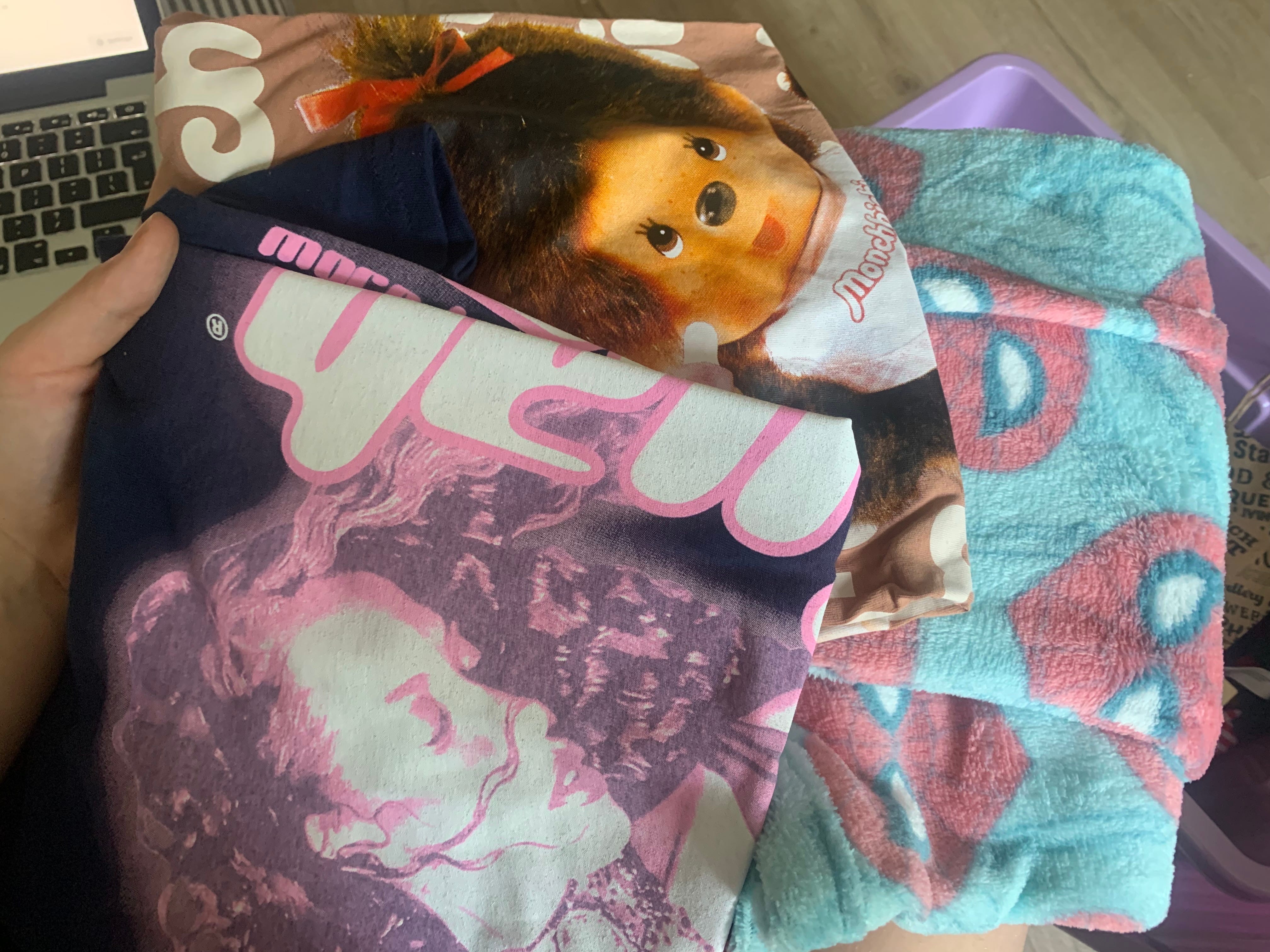
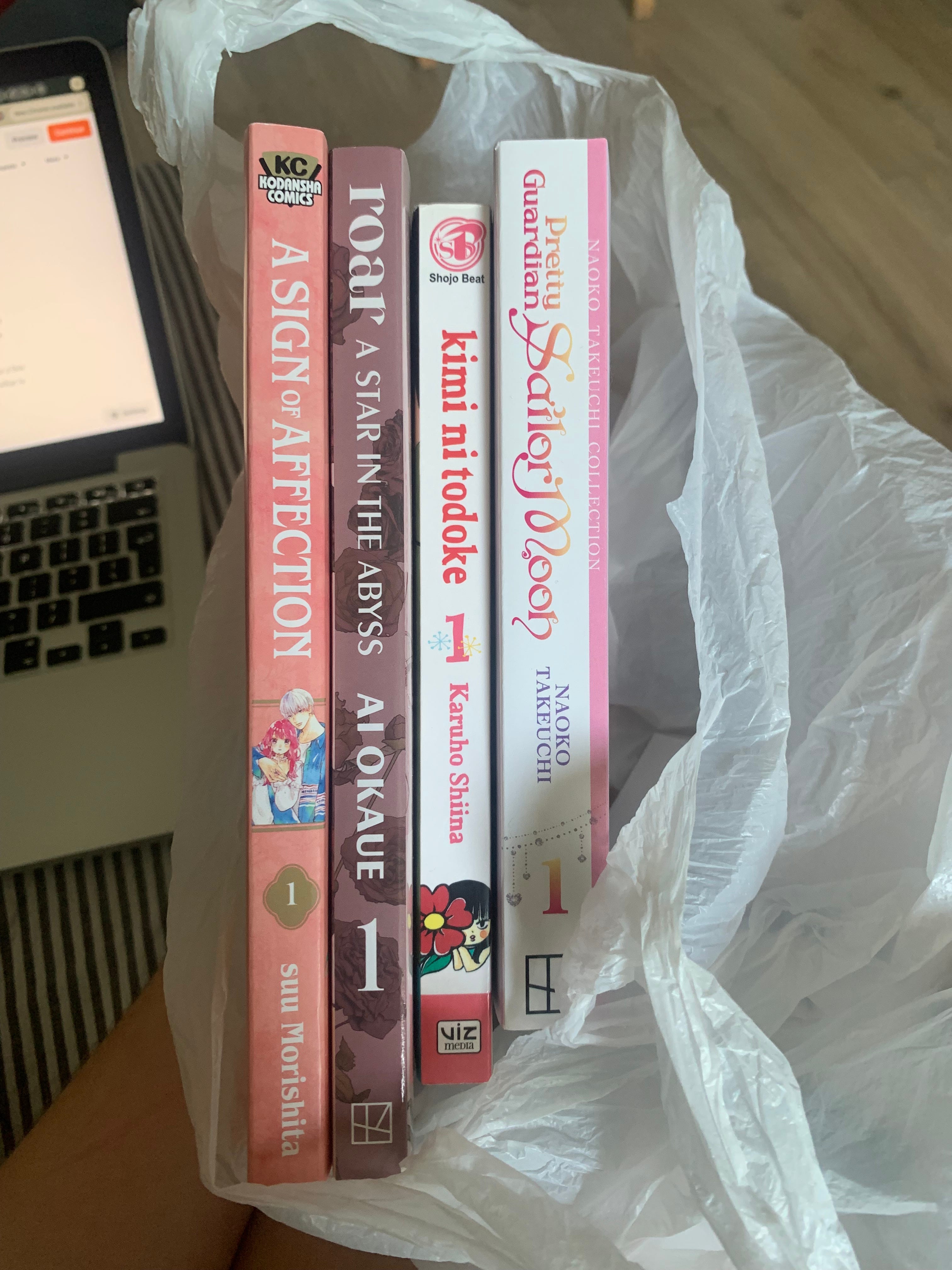
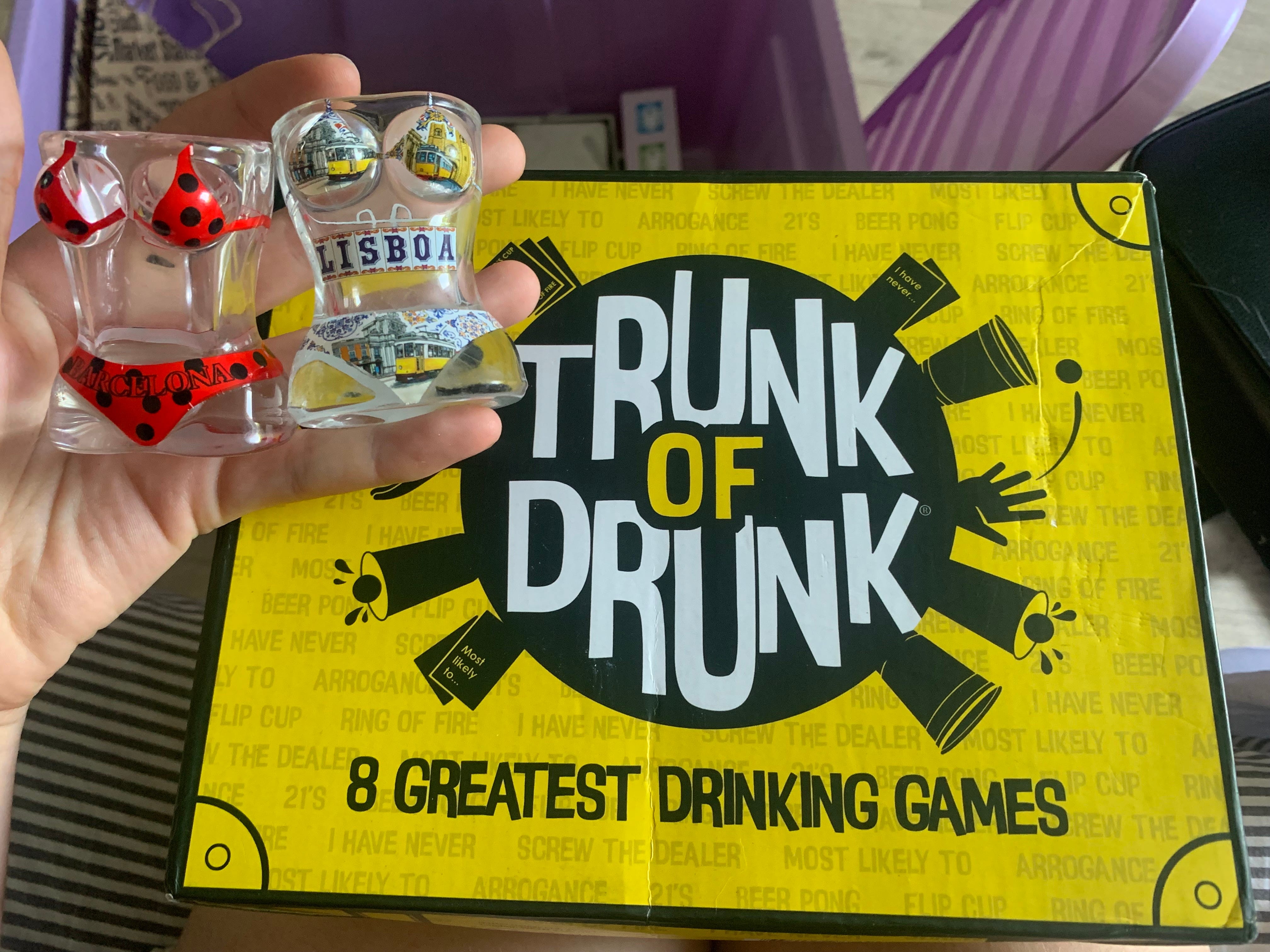
There’s also some random things I thrifted for vacations, a giant Machu Picchu puzzle, and some super cool posters I bought form small artists. Sometimes I’ve felt down and I’ve thought, “Why save them. You don’t even know if you’ll get there. Just put up the posters. Read the manga.”
But the idea of opening it all brand new and using it on the day I reach that dream spot just fills me with motivation and willpower. It’s like a promise to myself I keep building in a corner of the house. Opening it and using it feels like giving up on my dream and that makes me feel sad. But I do like to open it and look through the items when I’m demotivated. It fills me with renewed energy again.
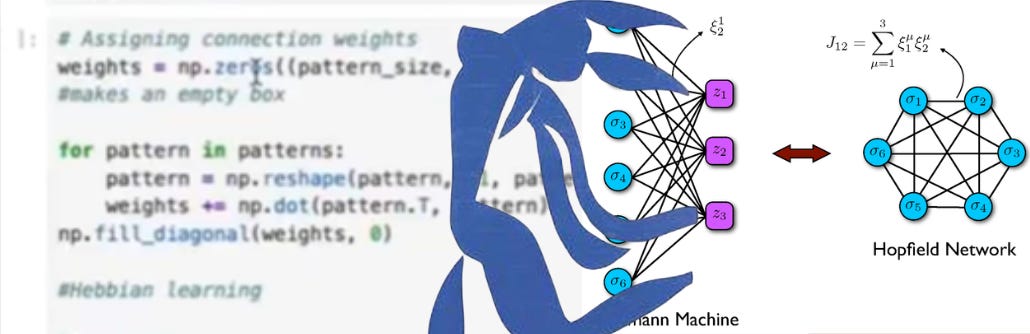
In the evening, I decided to get out my copy of “Why Machines Learn” and go over how the math works again. I mentioned I’ve been very inspired this year. One thing I’ve found lacking that I think would have helped me was a small workbook walking you through the math of a Hopfield Network, like this:

Something maybe 100 pages long, written very simple, which would be a good resource for self-learners. I imagined a little series of a few different types of neural networks. The math is intuitive if you’re deeper in your field, but for me, who didn’t develop the identity of a math natural, it’s not something I can do in my head. I was dying for a little worksheet to make it more tangible but I couldn’t find one.
I sat with my faith a little bit more on Saturday. I’ve been asking for renewed strength in my conviction. It reminded me of one of my favorite videos by one of my favorite radical authors and I felt better:

Through him was the first time I heard the phrase “Christian socialism” and it personally makes a lot more sense to me than whatever is going on right now with the alt-right. Paulo Freire wrote one of the books that opened my eyes to the world the most, “Pedagogy of the Oppressed”. In hindsight, it mirrors the New Testament very much — a system of learning that happens in the very streets, meeting people where they are to open their eyes and fight oppression.
Another Paulo Freire related favorite
I ended up on a stressed out walk in Paddington where I found a church with an open door. I went inside and kneeled for a long prayer. It seemed there was a music rehearsal going on in preparation for a Sunday night service. I was serenaded with intermittent runs of beautiful classic music on the piano.

I asked God to please stop stop stop testing my faith. “I get it. Okay? I get it.” Every worry, He’e gotten me through. Every issue. Everything I’ve asked for, I’ve received, even the impossible things like this project. And yet my life is filled with worries. I just worry worry worry all the time. I just want to relax. There’s always a new one. I’m broke — again. I work and work and yet — broke. I make money and save it, here comes a brand new wave of things to drain me. Sure, He’ll get me through. And it deepens my faith. But I don’t want to keep asking to “get through”. I don’t want to ask for anything.
I actually kneeled and prayed, felt a wave of peace, started worrying again, and knelt down for a second prayer.
About half an hour later as I walked through the park, I felt a weird feeling like something popped around my chest that I was holding onto. I felt some inner wisdom coming from inside that I needed to have faith in my heart, not my head. The point of my starting this series of reflections was to see if I could get to the bottom of why I knew I was safe and growing but I didn’t feel it. I have that same problem with my trust in God. I can read it, understand it, deduce it, and trust it as a concept but I don’t always embody it. I know faith. I get faith. I don’t feel faith, even though I thought I did, I guess. That’s what I realised when I walked around.
I’ve always found it funny that people are very adamant about finding some kind of mathematic proof or archeological evidence that God exists or He’s fake. There’s some knowledge that you are meant to feel. You feel God. Does that make His existence less relevant? I remember reading in a class on race and decolonialization in the Americas that dance was also a system of knowledge which was less respected as a form of epistemology because it wasn’t rational and written in the way Western knowledge requires. It is sensual and physical, requiring you to understand something without ever writing it down. Science is a great system which I obviously love, as I’ve revolved my life around it for the last year and a half. But sometimes it has a tendency to squash something intuitive and sensual about what we know. I found this in my dissociation science reading. “Well, we can’t see it in a scan. It’s fake. They’re making it up. ” But people are telling you, no? They’re telling you exactly how they feel and they’re not lying.
And I know it’s not exactly the same, but God is a feeling, an embodiment, a sensation, an experience. God is not an equation. And that makes Him no less real nor important to me.
I ended up wandering to the park where I used to bring the little girl I nannied all the way up to about this time last year. I actually dreamt about her last night so it was kismet that I ended up here. I was very spiritually agitated in that point in time. I hadn’t gotten into my master’s degree program yet and I hadn’t started this project. It actually began within a month or so of starting to nanny her. I was reading the chapter of “Surfing Uncertainty” on neural networks the second time I nannied her, on an unexpected sick day, and that’s when I decided to start it. I would read my research articles on the way to pick her up from school from my first nanny job and then on the train back all the way to my tiny flatiron Finsbury Park.
I remember bringing her to this park in a state of emotional agitation because I had no idea back then if this would pan out at all. I had just tried to reach out to the very boy I had a falling out with and proceeded to have a rocky friendship with for the next two years who had been my first love way back in the abuse situation from freshman year. He didn’t want to talk. So I think I was desperate for something in life to work out. I worried I was a bit crazy. I didn’t think I’d be able to figure out making a neural network but it was a problem for later.
I used to ask my future self to send me pictures of her succeeding so I knew I was alright. I’ve since stopped asking because I needed to stand on my own two feet and stop breaking myself into pieces like that. But I still send them to my past self because she’s not there yet so I have to do them for her. Since she asked. Today I sat in the same spot she was in in the grass and sent her a message:
If you just relax and do it and enjoy the process, you’ll reap a lot more benefit from this than you think.
She needed that but I won’t lie, I needed it more.
The #MeToo movement ushered in an important era of women telling their sexual assault stories so we could see how pervasive sexual violence was in our world.
I want us to keep doing that but as a young survivor, I want something else too. I want to see where people ended up a few years later.
One of the hardest parts of survival is you don’t know what your future will look like anymore. The news covers the bad stuff. I guess we’re meant to assume that after that, everyone stayed in the house with their blinds drawn out of fear or found a nice cave to hide in. It makes it feel like rape cases, particularly, are extreme circumstances that cut you out of life forever in one way or another.
Where is everyone? Are they teachers? Are they writing a book? Are they dating someone? Are they an artist now? What great things have they done? What joy and fulfilment are they reaping from life? Do they feel better? Do they feel stronger? How is life for you?
This is where I am right now, about 6 or 7 years later. I’m still processing but I like myself more. I feel productive and full of wisdom and inspiration. This is my survivor life. Where are some more?
EFT tapping led to a nice breakthrough this week.
I used to feel sad, jealous, and resentful when I compared myself to people who hit what I considered the “normal” timelines of sexuality because I felt like mine got knocked askew. That made me feel really abnormal and ashamed of myself the further away I felt like I got from those “normal” milestone moments. See, incels? I can relate :P
This week, after a few days of EFT, I looked back on a memory that used to bring me a lot of sadness and it just didn’t bring up the resentment anymore. It was when someone in my life had sex at the time I felt like I should have and it brought up a lot of grief at the time. And I still haven’t had sex, for a lot of different reasons. But I don’t feel weird about it anymore, I guess. I suppose I feel more agency over my experience now and I feel like I’m looking for a time that I feel comfortable and I feel good. I don’t feel like my trauma has control over me or that it’s stopping me from doing it. And even if I didn’t have the same story as the average person, I won’t assume my story will be bad in comparison. It’s okay for me to have my own unique trajectory.
“Unique trajectory” used to make me angry. Because it wasn’t my choice. I wanted standard. It felt robbed of me without my consent. “Unique trajectory” felt imposed. Honestly, though, I think we overestimate how many people really go the “normal” route. I’ve met women much older than me who have never had sex and they’re pretty happy. Adriana Lima is the hottest woman ever and she lost her virginity at like 27 (that one made me feel a lot better, I won’t lie). Some people lost their virginity in high school and it sucked ass and they wish they had done it different.
One thing about healing from sexual trauma, at least in my personal case, was that when I felt pushed or coerced into healing from something, I refused to heal in rebellion. I shut down. After having control robbed of me, I wanted to have control over the pace at which I accepted things. Just because I knew on the surface that something was the “right way to think” didn’t mean I wanted to be forced to think that way. Sometimes when people push you to get better, it can ironically have the opposite effect. So yeah, sure, I could move on and yeah I’ll probably be okay and have a great sex life and a great romantic life and everything. But I wanted to be the one to say that it was okay. I wanted to be the one to accept that when I was ready and not because it’s the right way to think. I guess that’s the wisdom I would want to pass on to people who feel like their loved ones are “stuck” or “need to move on”. That’s a personal choice. It’s not something to coerce people into, especially when they’ve already felt pretty coerced and like the world was out of their control. Maybe you need to give them the chance to be in control too.
Remembering this thought process gave me a deeper understanding of this particular sector of lonely men too. When the world tells you you are entitled to control, it must be significantly harder to let go of it and flow with the conditions life has given you. Not everything in life is going to fit the desired template, that’s the unfortunate truth. I felt shut down when people would tell me that sex wasn’t that scary and I just had to go out and do it. I wanted control over my body and my timeline that was stolen from me. I wanted to make a choice. So I can imagine that they must feel shut down in their own way when people tell them, “You can just go inwards and see that the standards are not necessary to fit, or on the other hand, you can control whether you try to fit them.” They don’t want to change themselves. They want control that they just cannot have. I was there too. I felt more undesirable the more people around me started to expand their sexual lives and I hadn’t. I started to feel like I seemed like a prude or I just couldn’t do it. I didn’t want to go out and force myself to overcome because I grieved the sense of control I had over “normal” when I was younger.
Real control is being able to command the situation at hand. That’s the lesson I learned. I had to grab the wheel of my own ship as it navigated the rocky waters of my own post-traumatic life. Control isn’t sitting around and hoping that the things you don’t like about life will change by magic. What’s hard is getting people to a point where they can find that lesson themselves. Because if my experience tells me anything, you can know it at a cognitive level but grief will put off that acceptance until you’re ready.
I asked earlier in the reflection where the perception was coming from that White men were the loneliest group and that this was amplifying their behaviors towards those around them. My gut feeling was that it was coming from a harrowing statistic many of us may already know:
Nearly 12 men lose their lives to suicide every day, or approximately 4,200 suicides each year. USA: In the United States, the suicide rate among males is 4 times higher than that of females. Male deaths represent 79% of suicides, amounting to roughly 100 men dying by suicide every day, over 36,000 annually.
This is unbelievably difficult and tragic.
A few reflections ago, I mentioned another popular statistic: 1 in 4 women have been victims of sexual assault. But I also referenced a much lesser know statistic: 1 in 5 Black women have been victims of capital R rape. Obviously this is throwing off the number significantly with another unseen disparity. Sometimes getting a closer look at a comprehensive statistic can tell a new story.
In both the U.S. and U.K., White people tended to have some of the highest rates of suicide, proportionately speaking. In the U.S, that number was exceeded by Pacific Islanders and Native Americans, in that order. Even so, the White population was on par.
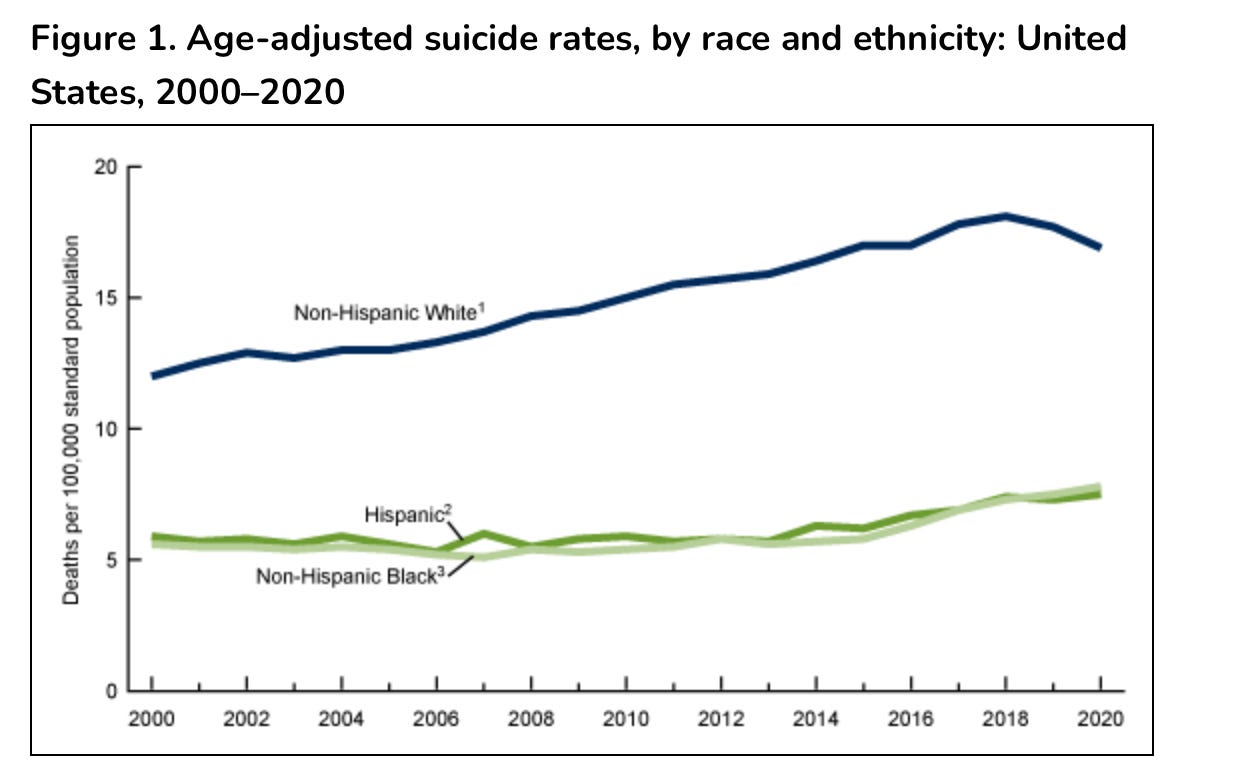
Of course, there are other underlying factors. In men 40 to 50, disabled people, those who have never worked or are in long-term unemployment, or are single.
Socioeconomic status plays a part as well.
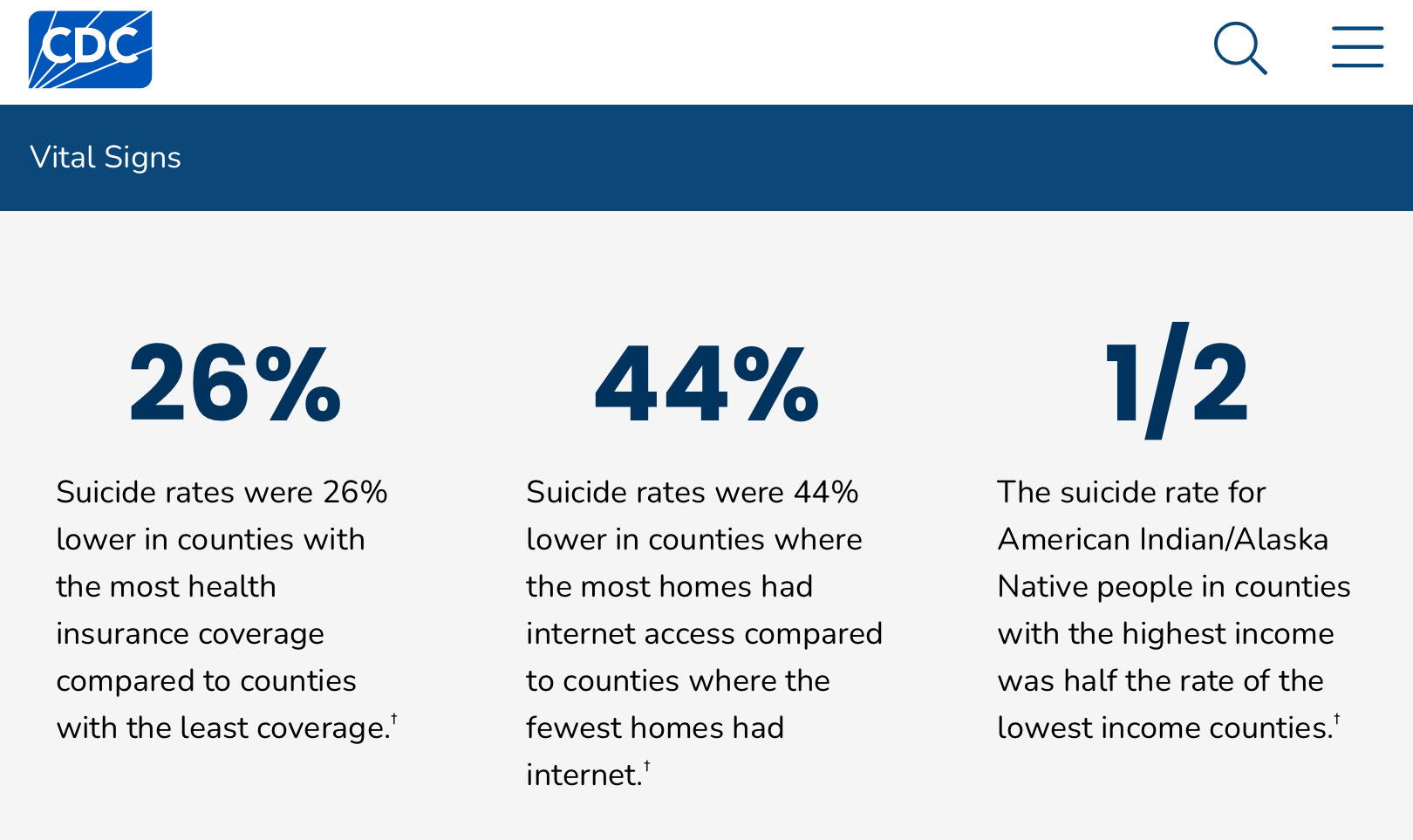
The problem with representing statistics is that we tend to attribute the face with the highest status to the number. That doesn’t make that picture false per se but it doesn’t always make it complete.
On the other hand, this evokes different potential conclusions. It may not be that White men are numerically speaking the loneliest or the most depressed about their loneliness. But it could be that for some cultural reason or another, they are more likely to externalize those feelings in a way that invites general conversation. Their feelings might not be as bad in number form, but maybe they find those feelings more distressing or disturbing. Maybe it has something to do with the individualistic culture they are raised in. Maybe they feel less obligation to stick around. Maybe they feel less needed by their wives and children.
These are more factual and nuanced questions to ask about White male mental health. It doesn’t have to be the worst of all to have the worst impact.
So let’s conclude this impromptu research study. What does this mean for male loneliness? I’ll try to tell you like a real researcher and not a 24 year old who has suddenly found herself with a lot more free time.
Let’s assume, for the sake of discussion, that the “Male Loneliness Epidemic” is a very popular, collective hypothesis, a theory which has gained a lot of traction over the last few years. How does it hold up to the research?
Can we say that we are seeing a pervasive “Male Suicide Epidemic”? Yes, absolutely, without a doubt we could say we have a male suicide epidemic.
Could we even say that we are navigating a “White Male Suicide Epidemic”? I don’t have the exact numbers but if we were to cross that large number of male suicides with the high probability of White suicides, you’re most likely going to see that this is a very real epidemic as well.
How about a “Black Loneliness Epidemic”? A “‘Non-White Ethnic Group’ Loneliness Epidemic”? There seems to be a relatively consistent body of evidence based on my research thus far to consider this an epidemic (though I never really defined that term so we’re unprofessionally basing this off vibes of the word “epidemic” alone). However, no one really talks about this or treats it like the buzzword that the Male Loneliness Epidemic has grown to be. A researcher would probably say that’s a good avenue for future research — why aren’t we talking about this epidemic?
Now — is there a “Male Loneliness Epidemic”? I didn’t read as many articles as someone might in a real research article. So that’s a limitation. But given my small data pool, the research presents sort of an iffy picture. There seems to be a small but not unimportant body of evidence so far which indicates that this might be at the very least a growing phenomenon of some kind. We might need to do more research. Maybe it’s a social media age thing. There’s a pervasive anecdotal account reflecting the idea that men are lonelier. Anecdotal accounts aren’t something to disregard entirely and maybe with more time or better questions, we could eventually see stronger evidence of a “Male Loneliness Epidemic”. At the end of the day, though, there might be even more interesting questions to ask. Are there sociocultural factors biasing us towards a certain perception of male loneliness? Do we just assume that these gender roles must be producing loneliness because they seem lonely, even if that’s not exactly how it manifests in real life? Is there a bit of manipulation coming from certain online spaces which might be louder and more aggressive than the random body of male participants you might actually encounter in real life? I think that one is promising. Or maybe it does exist but the picture is a lot more complex than what is being painted and who is co-opting the loneliness problem. Maybe (and the research seems to point to this a touch) men are lonely, but not the men we think.
And a “White Male Loneliness Epidemic”? I’m going to be honest, from this research alone, not specifically. Not as a collective phenomenon.
So does a “Male Loneliness Epidemic” exist? From this preliminary study, there was not strong enough evidence to firmly support this hypothesis. Further research is definitely needed.